
This article is the Turkish and localized version of HR Trends & Insights monthly newsletter which is published in English. If you would like to read English version, please click here.
This month, we take a deep dive into the ever-changing dynamics of performance management. While traditional performance evaluation systems often fall short in increasing employee engagement or achieving meaningful results, forward-thinking organizations are redefining how performance is measured and managed.
In this issue, we explore hybrid approaches to performance management, practices of leading companies, the role of feedback, and the impact of motivation on results. We also examine how HR technologies can improve these processes, providing data and analytics support to increase HR's strategic partnership effectiveness while reducing operational steps.
This newsletter, with approximately 15 minutes of reading time, includes reference articles, research, and videos. Therefore, it is recommended that you evaluate each section separately and set aside quality time to follow the references.
Our goal is to help you lead innovatively and stay ahead by offering actionable insights, expert opinions, and a perspective on developments shaping the HR world.
Performance Management: Balancing Between Evaluation and Development
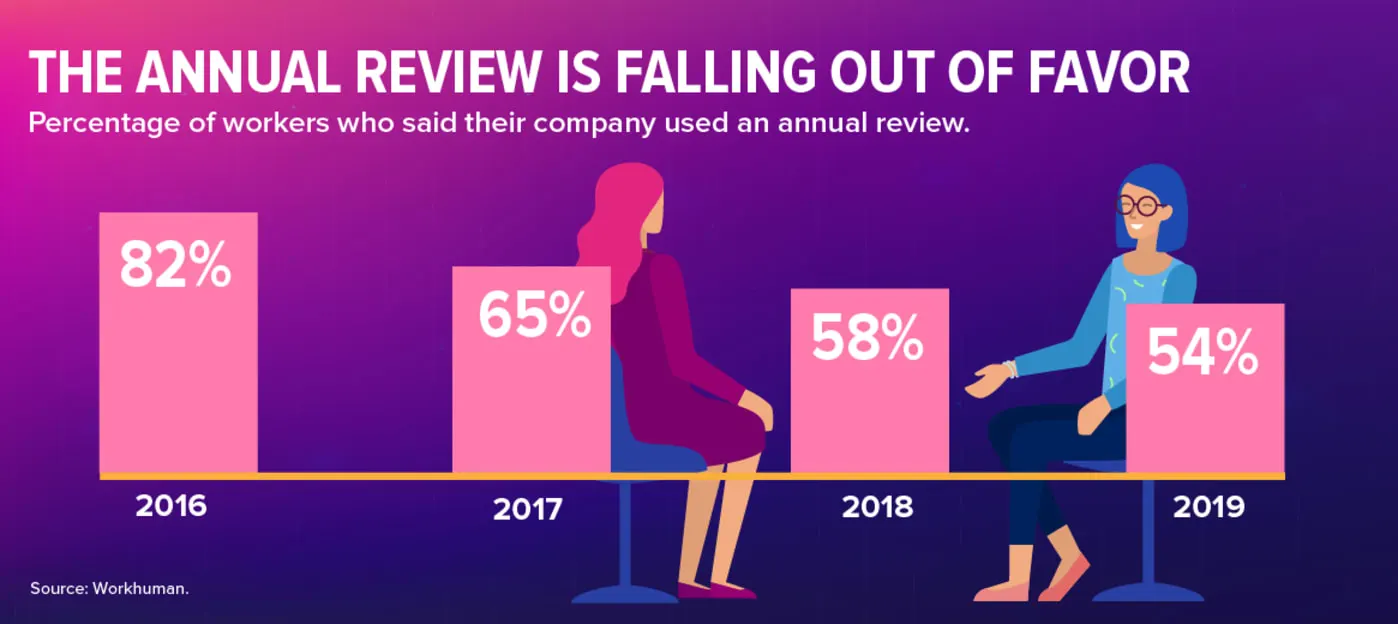
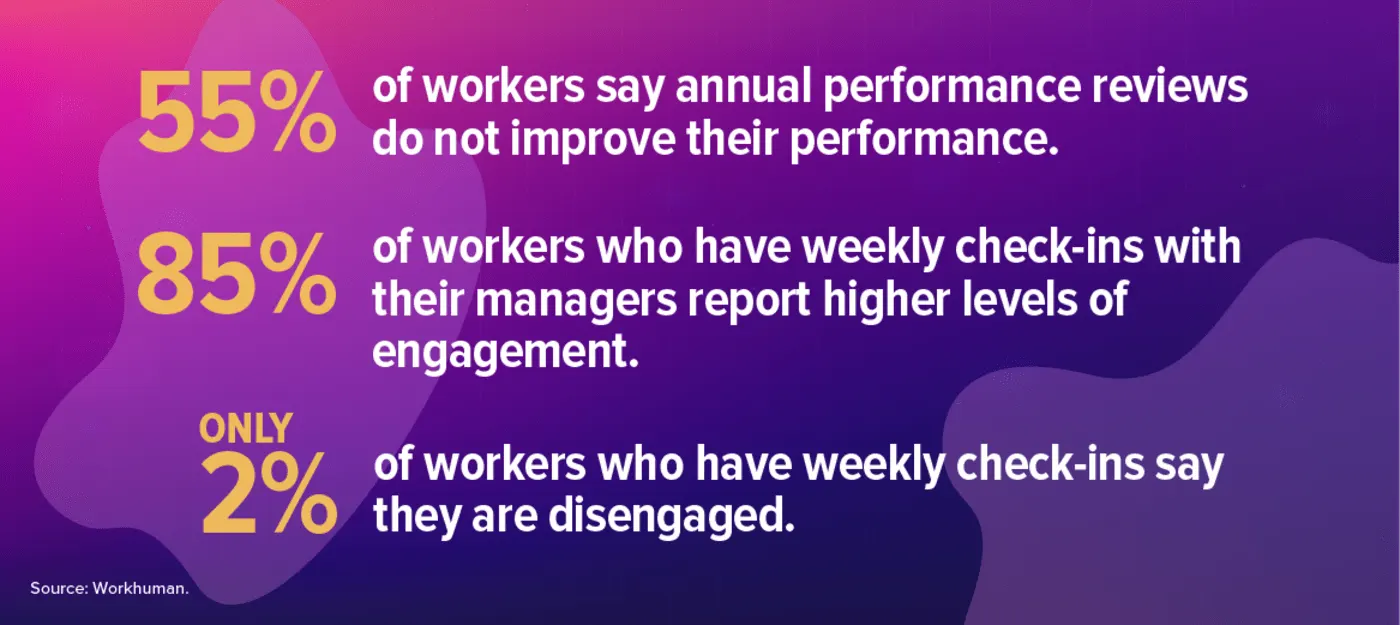
59% of employees believe that traditional evaluations have "no impact" on their performance.
In this issue, we examine how companies are redesigning performance management to create a culture that supports both business success and employee development while improving traditional performance management.
Leading companies are adopting an approach that embraces structured evaluations with a focus on continuous development and taking proactive steps to reduce biases. These methodologies represent a hybrid approach suitable for company culture.
What Affects Performance Scores?
Where traditional performance management and scoring systems fall short, leading companies use comprehensive and calibrated approaches to create a fair and objective system.
Key factors affecting performance scores, potential biases and mitigation strategies, and practice outcomes:
Goals (OKRs – Objectives and Key Results): Employees set measurable and ambitious goals aligned with company priorities. These OKRs are reviewed to evaluate how effectively individuals achieve their goals.
- Potential Bias: Overly ambitious goals can lead to unrealistic expectations, while cautious goals can limit innovation and company profit and gains.
- Mitigation Practice: Regular check-in meetings and transparent goal-setting practices ensure goals are realistic and adjustable when needed.
- Result: Use of OKRs encourages innovation and ensures teams focus on contributing to successful projects.
Competencies: Employees are also evaluated on core competencies such as teamwork, innovation, and leadership. These competencies reflect how well individuals align with values and contribute to company culture.
- Potential Bias: Competency evaluations can be subject to unconscious biases such as proximity, similarity, and fundamental attribution error.
- Mitigation Practice: Training managers to recognize and reduce biases ensures a fairer evaluation process.
- Result: Focusing on competencies ensures employees develop necessary skills and behaviors, creating a versatile and effective workforce.
Self-Assessment: Employees evaluate their performance, highlight their achievements, and review their impact.
- Potential Bias: Employees may exaggerate or underestimate their contributions. High performers may be overly modest, while low performers may overrate themselves.
- Mitigation Practice: Structured guidelines and self-awareness training support more accurate evaluations.
- Result: This encourages self-assessment and accountability, contributing to personal and professional growth.
Manager Evaluations: Managers evaluate performance based on results and behaviors.
- Potential Bias: Evaluations can be influenced by unconscious biases related to fundamental attribution error, halo effect, or personal relationships.
- Mitigation Practice: Using evidence-based evaluations and training managers to reduce these biases achieves consistent and objective performance ratings.
- Result: This practice leads to more consistent performance ratings by ensuring trust and transparency in the process.
Calibration Sessions: Managers discuss and align cross-team performance ratings. Function leaders from bottom to top come together to evaluate and calibrate the results of individuals in their teams.
- Potential Bias: Groupthink or advocacy bias can affect calibration discussions.
- Mitigation Practice: Companies organize structured and data-driven calibration sessions to ensure fairness.
- Result: Calibration sessions eliminate inconsistencies and guarantee fairer performance ratings.
The Foundation of Success: Regular Feedback
Feedback is an integral part of the performance management system. It can be presented in different ways:
Manager Feedback
- Managers provide continuous feedback through structured and regular check-ins, focusing on employee progress, challenges, and development opportunities.
- Regular feedback helps employees stay aligned with team goals and clearly understand expectations.
According to SHRM research, 85% of employees who receive weekly feedback feel more engaged in their work.
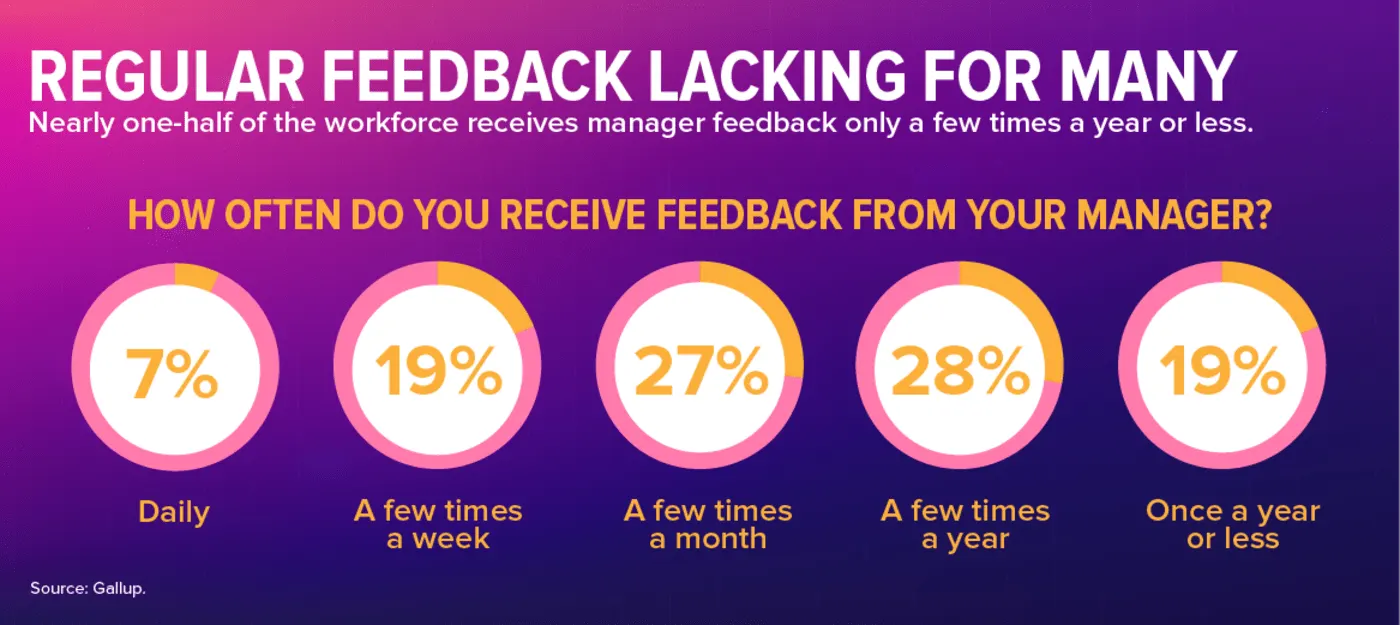
According to Gallup research, only 19% of Generation Y employees strongly state that they receive regular feedback at work.
Peer Feedback
- Peer feedback encourages collaboration and accountability; offers different perspectives on performance and development areas.
- This process ensures employees receive constructive feedback that supports their personal growth and career advancement.
According to Officevibe research, 62% of employees state they want more feedback from colleagues.
The Role of 360-Degree Feedback
A unique approach in companies' performance management is how they use 360-degree feedback. This feedback serves as a development tool rather than directly affecting performance scores. Employees receive constructive feedback from colleagues or managers that highlights their strengths and identifies development areas. This process promotes individual and professional growth.
Results of This Hybrid Approach
- Comprehensive Evaluations: By evaluating goals and competencies together, leading companies examine employee performance comprehensively. This approach balances goal achievement with cultural and behavioral alignment.
- Higher Employee Engagement: Focusing on continuous feedback and development increases employee motivation and engagement.
- Innovation and Alignment: Bold OKRs encourage innovation while guaranteeing alignment with the company's mission.
- Trust and Transparency: Fair calibration sessions and unbiased evaluations build trust among employees and strengthen the company's reputation among top employers.
- Skill Development: Focus on developing key competencies contributes to higher skill levels and employee engagement.
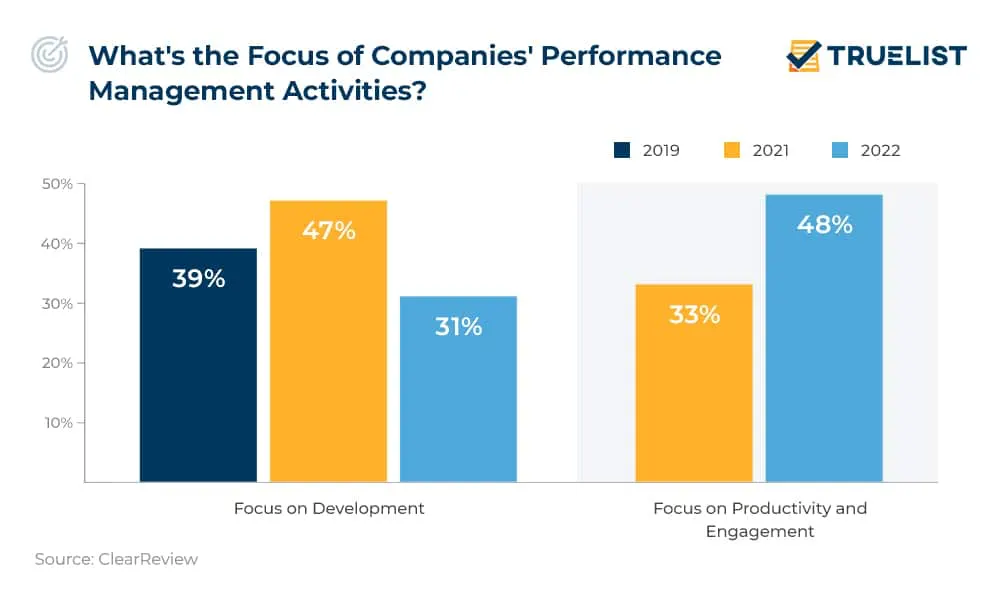
These performance management practices demonstrate the power of balancing objective evaluation with continuous development. By addressing goals and competencies together, a comprehensive approach is implemented that supports both employee and organizational success.
The Role of Incentive Systems: Balancing Tangible and Intangible Returns
Incentive systems play a critical role in aligning employee behaviors with organizational performance goals. These systems can be divided into two main categories: tangible returns (e.g., salary and financial incentives) and intangible returns (e.g., recognition and development opportunities). Both types have their own benefits and challenges. An effective incentive system requires a balance that will motivate employees while supporting desired results.
1. Tangible Incentives: Salary and Financial Rewards
Bonuses, salary increases, and other monetary rewards support short-term goals by creating a direct link between performance and reward. Competitive compensation policies are a powerful tool for attracting and retaining talented employees.
On the other hand, tangible incentives can cause employees to overlook broader organizational goals by focusing on narrow targets (the principle of rewarding A while hoping for B). For example, sales incentives may drive volume rather than profitability, creating financial risk for the company in the long run.
2. Intangible Incentives: Recognition and Development
We all know that employees become more motivated and engaged with recognition programs where their efforts are seen and appreciated. Non-financial rewards, such as public praise, personalized thanks, and recognition programs, strengthen employees' sense of belonging and purpose.
Since recognition and development focus on Growth Mindset, development opportunities (e.g., training, career paths, mentoring) signal a long-term investment to employees, increasing engagement and loyalty.
Leveraging HR Technology for Performance Management
Performance management practices can be significantly improved with the right HR technology. A comprehensive analysis of leading performance management software that supports features such as continuous feedback, goal alignment, and competency assessment is included here.
Before purchasing any HR technology, it is important for HR professionals to prepare RFP (Request for Proposal) and SoW (Scope of Work) documents to align technology with performance management processes.
Performance Management Software Overview
In this article, we highlighted some HR technology providers and software. However, it is recommended to research more technology providers considering your organization's expectations, processes, and cultural fit. Here are some performance management software with specific features:
SORWE - Continuous feedback, OKR alignment with goals and competencies, 360-degree evaluation, Employee and manager evaluations, 1:1 meetings, Employee engagement surveys.
HRweb - Goal and competency setting, evaluation, Goal-oriented 1-1 dialogues between manager and employee, Transparent task management toward common goals, Year-round instant, continuous forward and backward feedback.
SAP SuccessFactors - Performance and goal management, Continuous feedback, Comprehensive analytics, Training and development modules.
BambooHR - Customizable performance reviews, Goal tracking, Feedback collection, Employee self-service features.
Workday - Performance management, Goal tracking, Continuous feedback, Talent management, In-depth analytics.
idenfit - Goal setting, Performance evaluations, Competency analyses, Time tracking, Attendance management.
Lattice - Performance evaluations, Goal tracking, Continuous feedback, 1:1 meeting tools, Employee engagement features.
HR Events Not to Miss
Peryön Compensation Management Training
📅 Date: December 17, 2024
📍 Location: Online
Peryön Performance Evaluation Interview Preparation Training
📅 Date: December 18, 2024
📍 Location: Online
i4cp's 2025 Priorities and Predictions
📅 Date: December 17, 2024
📍 Location: Online
Top 10 Future of Work Trends for 2025 and Beyond
📅 Date: January 23, 2024
📍 Location: Online
Regulatory Updates: Latest in Employment Regulations
TOPIC: Regulation Change Regarding Meal Allowance Insurance Exemption
The "Regulation Amending the Social Insurance Transactions Regulation" was published in the Official Gazette dated December 2, 2024 and numbered 32740.
As you will recall, in our November newsletter we shared that the Council of State 10th Chamber decided to cancel Article 97/7-(a) of the Social Insurance Transactions Regulation and sections 2.1.2 and 2.1.4 of Circular No. 2022/22 titled "Meal Allowance" with Decision E. 2023/170 and K. 2024/1853.
According to this, if meals are not provided at the workplace or its annexes, and benefits provided through meal provision to the insured are provided in cash or through instruments such as meal cards, checks, or coupons that can be used for purposes other than meal service, the daily exemption amount will be determined by the SGK Board of Directors.
Following the change, details regarding implementation are expected to be announced through a Circular to be published by the Social Security Institution Insurance Premiums General Directorate.
Regulation Amending the Social Insurance Transactions Regulation
Let's Keep the Conversation Going
To summarize the key takeaways from this newsletter:
Redesigning Performance Management
Traditional performance evaluation systems are increasingly seen as ineffective, with 59% of employees stating these systems have no impact on their performance.
- Leading companies are adopting hybrid approaches that combine OKRs, regular check-in meetings, competency evaluations, self-assessments, and calibration sessions. These methods offer a holistic and fair evaluation process.
- Many companies still use annual evaluations and classic approaches. Organizations need data and statistics to identify high and low performing employees. Therefore, working without any scored performance results seems risky for some.
- In this case, when redesigning performance management, a structure supported by senior management and compatible with the organization's culture should be established. It is important to make processes simpler and leaner, making them clear and understandable for all parties.
The Power of Feedback
Continuous feedback, 360-degree evaluations, and regular manager check-ins are fundamental elements of modern performance management.
According to Gallup Research, managers who receive feedback on their strengths showed 8.9% higher profitability.
Motivation Drives Performance
Balancing tangible rewards (e.g., financial incentives) with intangible rewards (e.g., recognition, development) increases motivation and long-term commitment.
80% of Generation Y employees prefer instant recognition over formal evaluations and view it as critical to their growth.
Incentives should be aligned with clear and measurable performance goals to prevent contrary behaviors.
Companies should invest in their employees just as they invest in technology and infrastructure. For healthy and successful performance results, implement leadership development programs and support an open feedback culture.
We'd Love to Hear Your Views
We would be delighted to hear your thoughts and comments on the content shared in this newsletter. Don't forget to share your suggestions for topics you'd like to see in future issues.
Subscribe to HR Trends & Insights to follow the latest developments in the HR world.